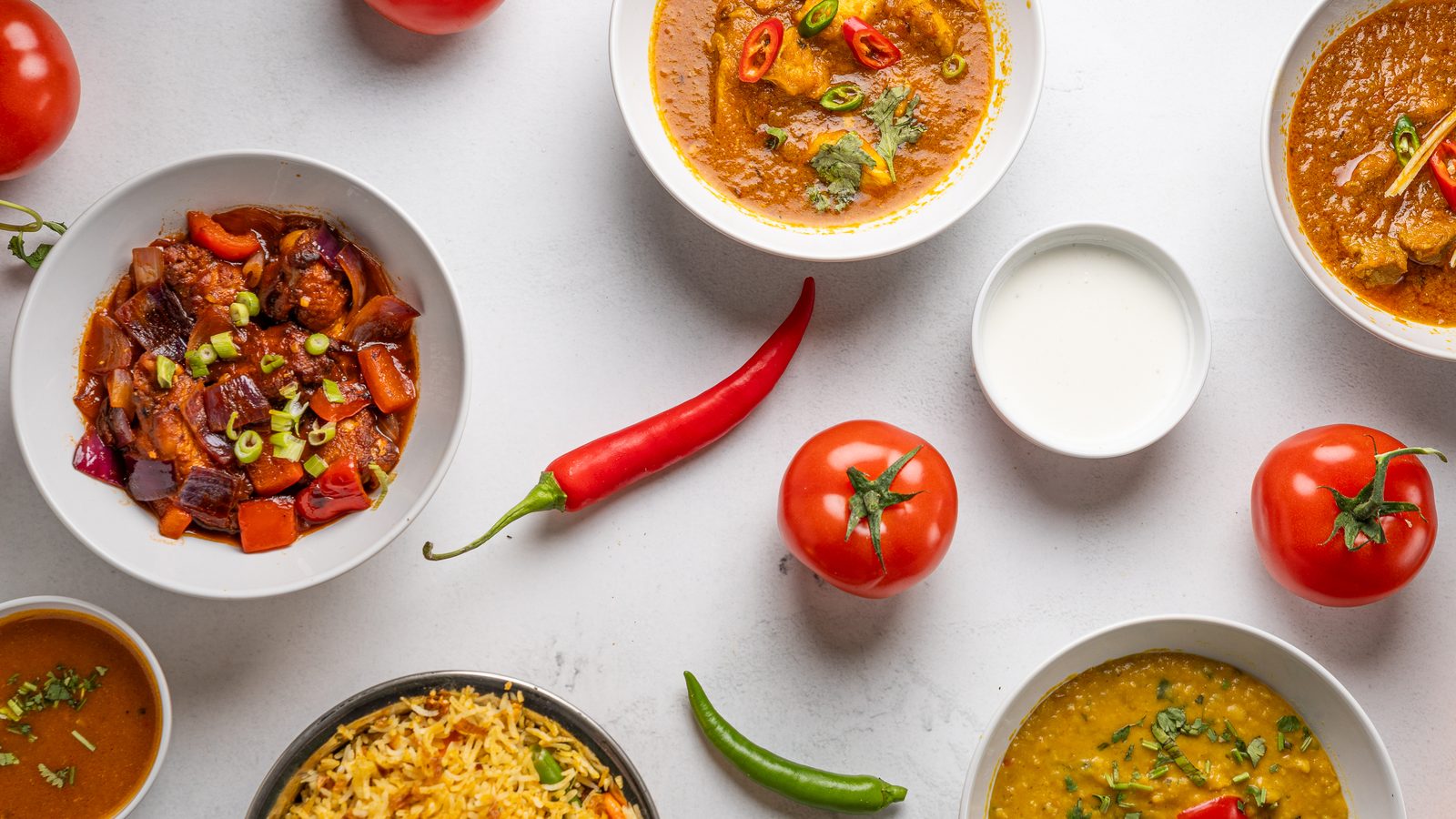
You can learn about Indian food culture in Sweden at Masala & More, Baltzarsgatan 12, Malmö: come in, eat, and talk to the team. Our staff and manager will explain where each dish comes from and how it is eaten in India, and if you ask for a thali you will taste how a full Indian meal is balanced on one plate. The menu descriptions and our blog at masalaandmore.se/blog explain the ingredients, techniques and traditions behind the food, from why Dal Makhni is slow-cooked overnight and how a clay tandoor works to what Golgappe and Dahi Puri are and how Diwali and Holi are celebrated at the table. We are a family-run restaurant a few minutes from Malmö Central Station, and we cater across Skåne.
What is Indian Food Culture?
Indian food culture is one of the oldest and most diverse in the world, spanning thousands of years of history, religion, geography, and tradition. Food in India is never just about eating — it is about community, celebration, hospitality, and identity. Every region of India has its own distinct cuisine, ingredients, cooking techniques, and food rituals.
Indian Food Culture — What We Celebrate at Masala & More
The Tandoor Tradition
The tandoor — a clay oven fired with charcoal — is central to Indian food culture. It is used to bake naan, roti, and marinate meats. At Masala & More in Malmö, we use a real clay tandoor oven to bake all our breads fresh to order, preserving this ancient tradition.
Street Food Culture
India's street food culture is vibrant, bold, and deeply regional. Delhi's Aloo Chaat, Mumbai's Pani Puri, Punjab's Samosa — each tells a story of its city and community. At Masala & More, we bring Delhi-style street food to Malmö — Dahi Puri, Aloo Chaat, Paneer Pakora — made exactly as they are on India's streets.
The Dal Tradition
Dal — lentil-based dishes — are the backbone of Indian food culture. No Indian meal is complete without dal. Our Dal Makhni, slow-cooked for hours in a buttery, spiced gravy, represents the heart of Punjabi home cooking.
Spice Culture
Indian cooking uses a complex palette of spices — cumin, coriander, turmeric, cardamom, garam masala, fenugreek, mustard seeds, and more. These spices are not just for heat — they add depth, aroma, colour, and medicinal properties to food. At Masala & More, we use handpicked, authentic spices in every dish.
Hospitality — Atithi Devo Bhava
'Atithi Devo Bhava' — 'the guest is God' — is a core principle of Indian culture. At Masala & More in Malmö, this philosophy guides everything we do. Every guest is welcomed warmly, every meal is prepared with care, and every visit is meant to feel like coming home.
Experience Indian Food Culture in Malmö
Visit Masala & More at Baltzarsgatan 12, 211 36 Malmö to experience authentic Indian food culture firsthand. Open daily. Book at masalaandmore.se/reservations or call +46 70 304 76 42. Order online at order.masalaandmore.se.
The quickest way to learn is to ask. Our staff and manager are happy to explain where a dish comes from, how it is eaten in India and what to pair it with, and a thali is the best way to try several dishes in one sitting. For reading, the menu descriptions and our blog at masalaandmore.se/blog cover ingredients, techniques and traditions, including why Dal Makhni is slow-cooked overnight, how the clay tandoor works, what Golgappe and Dahi Puri are, and Diwali and Holi at the table. We are family-run, a few minutes from Malmö Central Station, and we also cater across Skåne.
Frequently Asked Questions
Where can I experience Indian food culture in Sweden?
Sweden has a growing Indian food scene, concentrated in Stockholm, Gothenburg and Malmö. In Malmö, Masala & More at Baltzarsgatan 12 serves Indian cooking prepared the way it is in Punjabi home kitchens: whole spices ground and tempered on the day, dal slow-cooked for hours, and breads baked to order in a clay tandoor rather than reheated.
What is the difference between North and South Indian food?
The staple grain is the clearest divide. North Indian cooking is wheat-based, built around tandoor breads like naan and roti, with dairy used generously in the form of cream, yoghurt and ghee. South Indian cooking is rice-based, leaning on fermented batters for dosa and idli, coconut, curry leaves and tamarind. Masala & More cooks in the Indian tradition, specifically Punjabi.
Is Indian food in Sweden adapted to local tastes?
Often, yes. Many Indian restaurants in Sweden reduce chilli heat and sweeten gravies to suit local palates. The better approach is to keep the cooking method traditional and adjust the chilli to the guest rather than reformulating the dish. At Masala & More we cook to the original recipe and set the spice level to whatever you ask for, from mild to genuinely hot.
Taste it yourself
Baltzarsgatan 12, Malmö · open every day
More from the blog
What Ingredients Are Used in Authentic Indian Curries? — Masala & More Malmö
Authentic North Indian curries start with onion, garlic, ginger, fresh tomatoes, garam masala, coriander, turmeric and chilli, adjusted by region and protein. Masala & More, Malmö.
Read more →
What Makes Tandoori Bread Smoky and Flavorful? The Science Behind It
Tandoori bread is smoky because it is baked in a real clay tandoor at 480°C, and flavourful because the dough ferments for 12 hours. Masala & More, Malmö, bakes 13 breads this way.
Read more →Discover Authentic Indian Cuisine with Online Ordering at Masala & More in Malmö
Yes! Masala & More at Baltzarsgatan 12 Malmö offers online ordering for takeaway at order.masalaandmore.se. Fresh Indian food — curries, street food, tandoori breads — ready for collection.
Read more →